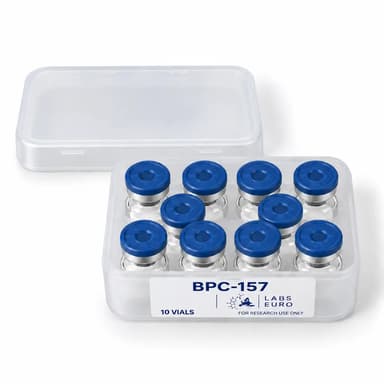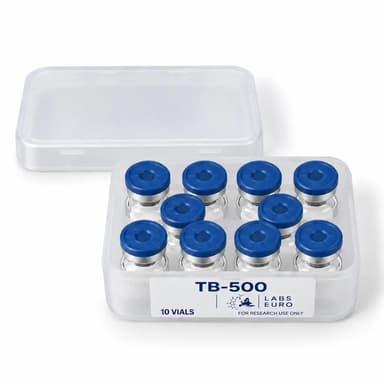
Σχετικά με TB-500 + BPC-157 (TB-500 + BPC-157)
Buy TB-500 + BPC-157: two research peptides with distinct profiles
The blend brings together two peptides that raise different questions in research. TB-500 is an acetylated fragment of thymosin beta-4 with the described sequence Ac-LKKTETQ. BPC-157 is a synthetic pentadecapeptide made of 15 amino acids. While research on BPC-157 focuses on cell movement and tendon tissue, the focus for TB-500 is on the identity of the fragment and the behavior of its metabolites.
These different perspectives make the blend interesting for peptide research. The combination brings together two substances that each represent their own experimental questions. Different peptide forms, models, and analytical questions come together. That is precisely what makes it appealing for comparative research approaches.
BPC-157: cell movement and tendon tissue
In preclinical regeneration research, BPC-157 is studied in connection with tendon tissue and cell movement, among other areas. The focus is on processes central to the organization of connective tissue: fibroblasts migrate into tissue, proliferate, and produce components of the extracellular matrix. For BPC-157, a study using rat tendon explants and cultured tendon fibroblasts reported enhanced outgrowth of tendon tissue, increased migration, and better survival of the cells studied (study on BPC-157 and tendon tissue).
FAK and paxillin: signals of cell movement
The observed changes were accompanied by increased phosphorylation of FAK and paxillin. Both proteins are involved in controlling cell movement and cell adhesion; collagen and other matrix proteins give connective tissue its structure, while fibroblast motility and adhesion help determine how this structure forms. The finding thus links tendon tissue outgrowth with intracellular signals that support fibroblasts during migration and tissue matrix organization. The data come from rat tissue and cell cultures and are a preclinical contribution to regeneration research.
TB-500: fragment, metabolite, and metabolic profile
TB-500 is not full-length thymosin beta-4 but an acetylated fragment. Its sequence is described as Ac-LKKTETQ. This distinction matters because findings for the long parent protein do not automatically apply to the fragment. A study published in 2024 analyzed TB-500 and its metabolites in cell culture and rat samples (investigation of TB-500 and its metabolites).
The work separated the acetylated parent peptide from its breakdown products. In the fibroblast wound healing assay, the metabolite Ac-LKKTE showed significant activity; the parent peptide TB-500 did not reproduce this activity in the experiment. This highlights how closely peptide identity, metabolism, and observed activity are connected. For research, it is therefore crucial to know which fragment or metabolite was actually studied.
The combination as a research variant
A blend brings together two different research directions: BPC-157 contributes data on fibroblast movement and tendon tissue, while TB-500 provides findings on fragment identity and metabolites. This makes the combination interesting as a research variant, because it brings two levels of peptide biology inquiry into view side by side.
The cited studies concern the components separately, not the finished blend. Statements about an additive or synergistic effect cannot be derived from them. The blend thus broadens the view of two different peptide biology profiles without conflating the individual findings.
TB-500 + BPC-157 in the shop
The amount per vial is 5 mg of TB-500 and 5 mg of BPC-157. Buy TB-500 + BPC-157 now and view the blend in the shop.
Ποιότητα, καθαρότητα & τεκμηρίωση παρτίδας
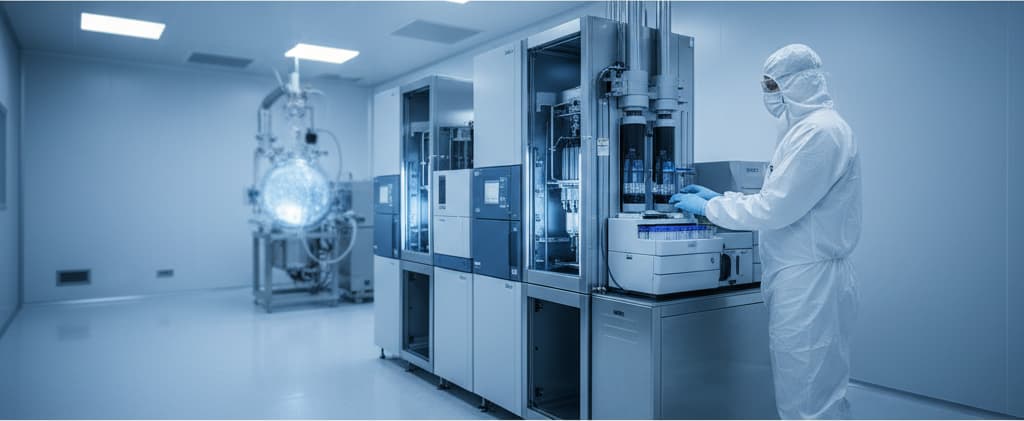
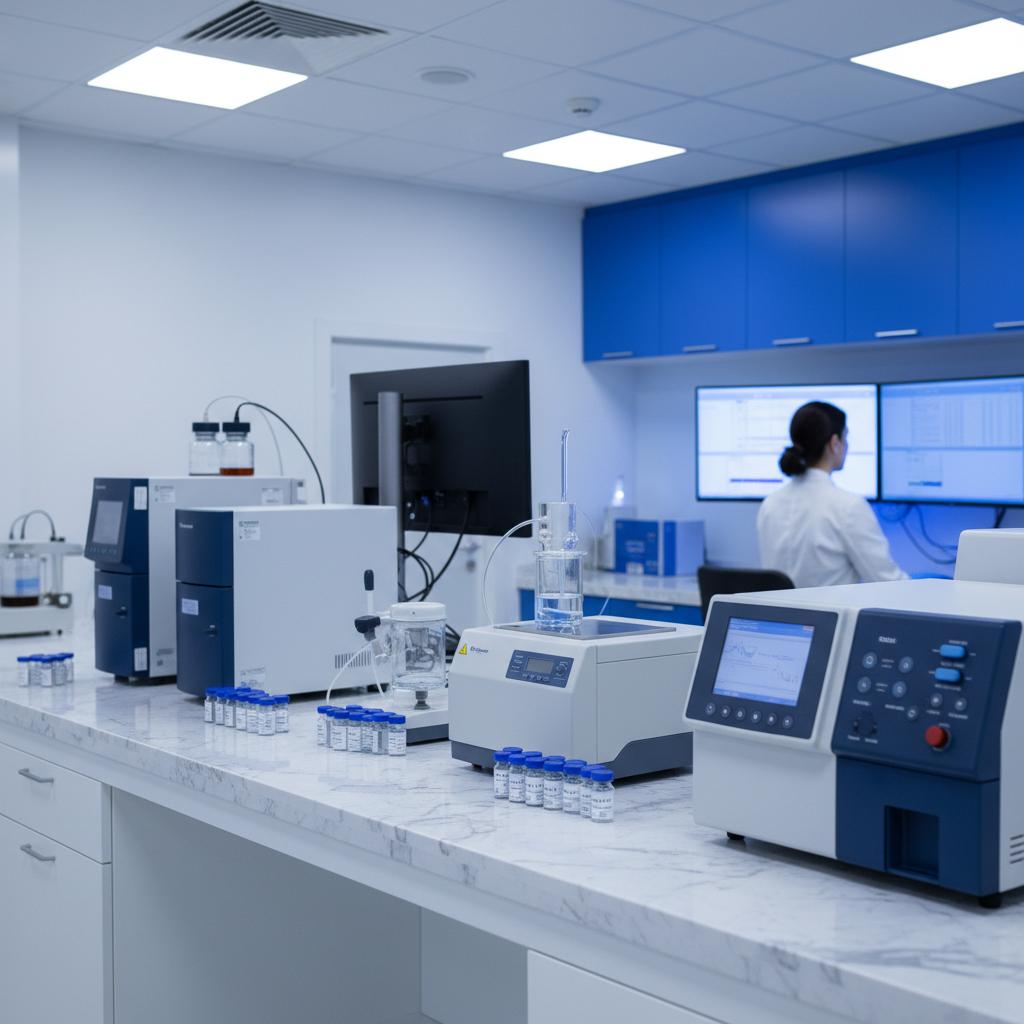
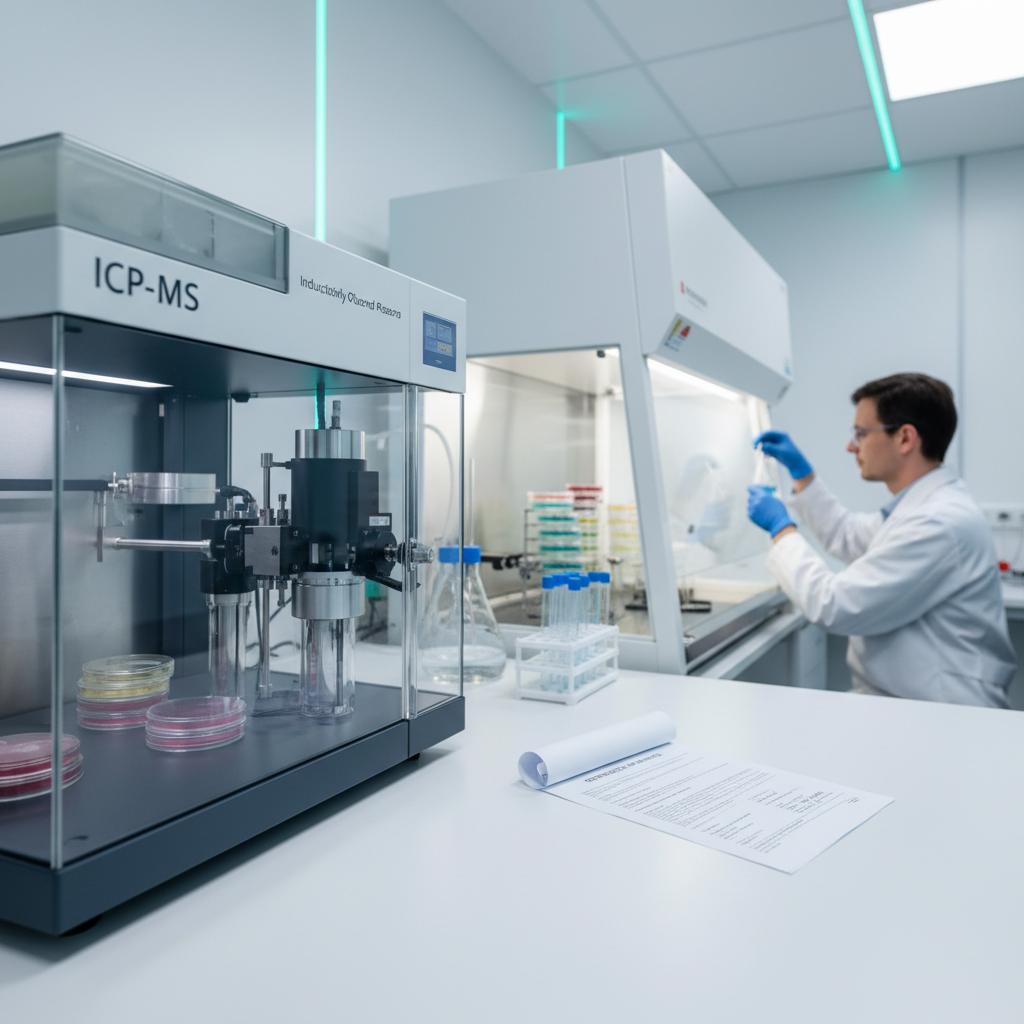
Κάθε παρτίδα αναλύεται από ανεξάρτητο εργαστήριο με HPLC πριν από την αποστολή. Τεκμηριώνουμε την καθαρότητα (Μ.Ο. 99,41 % το 2026), την ταυτότητα μέσω φασματομετρίας μάζας και τη στειρότητα. Η παραγωγή πραγματοποιείται σύμφωνα με τα πρότυπα GMP σε εργαστήρια πιστοποιημένα κατά ISO.
Συχνές ερωτήσεις
Das Blend kombiniert TB-500 und BPC-157. TB-500 wird als acetyliertes Fragment des Thymosin beta-4 beschrieben, BPC-157 als Pentadecapeptid aus 15 Aminosäuren.
Weil TB-500 einen Teil der Sequenz des vollständigen Thymosin beta-4 umfasst. Seine Sequenz wird als Ac-LKKTETQ beschrieben.
Pentadecapeptid bezeichnet ein Peptid aus 15 Aminosäuren. Der Begriff beschreibt die Länge der Peptidkette, nicht eine bestimmte Wirkung.
Ac-LKKTE ist ein Metabolit des acetylierten TB-500-Ausgangspeptids. In der zitierten präklinischen Untersuchung zeigte der Metabolit im Fibroblasten-Wundheilungsassay eine signifikante Aktivität.