Regeneration is not a single step but an interplay of cell movement, tissue remodeling and finely tuned growth signals. BPC-157 is a synthetic pentadecapeptide of 15 amino acids investigated in this context. Its profile combines tendon tissue, fibroblasts and the regulation of growth hormone receptors.
Buy BPC-157: a peptide for regeneration research
The focus is on how cells respond to load and tissue changes. Fibroblasts are central players here: they form and organize components of the extracellular matrix and migrate to where remodeling processes take place. BPC-157 has been examined in preclinical models for precisely these cellular processes.
Tendon tissue: outgrowth, migration and survival under stress
In a study of rat tendon tissue and cultured tendon fibroblasts, BPC-157 promoted tendon tissue outgrowth. At the same time, cultured fibroblasts showed increased migration and spread more extensively; under stress, more of these cells survived. Migration was accompanied by increased phosphorylation of FAK and paxillin.
FAK and paxillin are located at the contact sites between a cell and its environment. They integrate mechanical and chemical signals and help coordinate movement, adhesion and spreading. This interface is precisely what makes the finding interesting for regeneration research.
Tendon fibroblasts produce collagen and other structural proteins of the extracellular matrix. When tissue is remodeled, they must orient themselves, migrate to the right site and survive there. Migration and survival under stress are therefore readily measurable steps that are relevant to repair research.
Important for interpretation: basal fibroblast proliferation did not increase directly in the initial experimental setup. The observed effects were related to outgrowth, migration, spreading and survival of the cells.
Growth hormone receptor: a second level of regulation
A separate study in cultured rat tendon fibroblasts found higher growth hormone receptor expression at the mRNA and protein levels in the presence of BPC-157. When growth hormone was added afterwards, the cells proliferated more and JAK2 activation increased.
JAK2 is an enzyme that transmits signals from the growth hormone receptor into the cell interior. Receptors are the sites where a cell receives signals, and their number influences how strongly a signal arrives. Higher receptor expression can change sensitivity to growth hormone without the hormone level itself rising.
The finding therefore describes altered receptor regulation and a stronger cellular response to additional growth hormone. It does not show increased release of growth hormone in the body or a proven systemic effect in humans.
From cell model to clinical observation
The results so far come from preclinical tendon models. Human data are much sparser. A small retrospective observational series on knee pain recorded 12 patients contactable by telephone who had received BPC-157 alone; 11 reported improvement. Another subgroup received BPC-157 together with TB4.
The series was uncontrolled, relied on self-reports and covered different causes of pain. It therefore cannot establish efficacy or provide a reliable statement about effect size. Nevertheless, it remains notable as an indication of clinical research interest.
Select BPC-157 for research
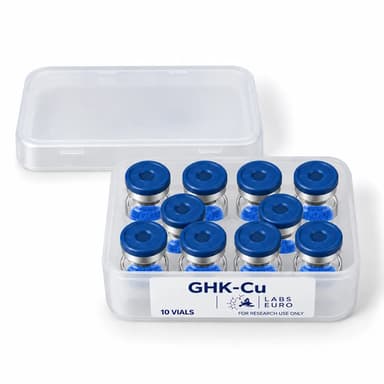
In its research profile, BPC-157 combines cell movement, survival under stress and growth signals in an unusually concrete way. For your own research, the peptide is available as a variant with 5 mg or 10 mg per vial. Buy BPC-157 now and choose the right variant.