Semax is a synthetic peptide made up of seven amino acids. Its sequence corresponds to the ACTH fragment (4-7), extended by proline, glycine and proline, hence the notation ACTH(4-7)PGP. This short chain has given rise to a research profile of its own, one that focuses primarily on processes in brain tissue.
What stands out is the relationship between size and scope: the structure of seven building blocks is compact, while the levels studied range from gene expression and individual signaling proteins to measurements in patients after a stroke.
A heptapeptide with clear origins
Semax is not full-length ACTH. Research focuses on central processes in brain tissue, not on the hormonal roles of the parent hormone. This clear distinction is precisely what makes the molecule attractive for experimental work: a defined sequence, a clearly described structure and a field of research that can be precisely delineated.
The short chain is produced synthetically and is available as a chemically defined substance. This makes it easier to relate results from different experimental series to one another than would be possible with inconsistent starting materials.
Ischemia and reperfusion as a research model
The model in which Semax is studied most often is cerebral ischemia followed by reperfusion. Blood flow to an area of the brain is interrupted and later restored. The second phase in particular is biologically dynamic: as oxygen returns, oxidative stress, inflammatory signals and altered synaptic activity occur.
This is exactly where the transcriptome study begins. After temporary occlusion of the middle cerebral artery in rats, the RNA sequencing of brain tissue revealed a shifted gene profile: inflammation-associated genes were expressed less strongly, while neurotransmission genes were expressed more strongly.
Genes are, in a sense, a cell's current work plan: what it can build depends on which sections are being read at the moment. When this profile shifts toward signal transmission and away from inflammatory programs, it points to how the peptide influences the response to reperfusion stress. Such changes are molecular signals from rat tissue, not yet patterns observed in humans.
CREB and signaling proteins in focus
A second study in the same model went one level deeper and looked at the proteins themselves. After ischemia and reperfusion in rats, more active CREB was found, while selected proteins associated with inflammation and cell death decreased; the pattern differed by brain region (protein profile in the rat model).
CREB is a transcription factor that translates signals from inside the cell into gene programs. When it is activated more strongly, adaptation and survival programs are set in motion, including those that affect synaptic plasticity. The fact that inflammatory markers are simultaneously lower fits the picture from the transcriptome study.
The fact that individual areas respond differently is typical of brain tissue: regions differ in metabolism, cell composition and sensitivity to circulatory disturbances. For research, this differentiation is particularly interesting because it shows where a peptide acts and where it does not.
BDNF and recovery after stroke in humans
The step from model to human has indeed been taken in Semax research, albeit in a clearly defined setting. In a comparative study of 110 patients after ischemic stroke, Semax subgroups were followed during rehabilitation. There, plasma BDNF levels were higher, and the Barthel Index, which reflects independence in daily life, improved more favorably.
BDNF is a growth factor that accompanies the formation, stabilization and adaptation of synapses. In research, plasma levels are regarded as an easily accessible marker for these processes, even though they provide only indirect information about what is happening in the brain.
The study also examined when rehabilitation begins and compared subgroups with one another. Blinding or randomized assignment is not described in the abstract, and all participants received rehabilitative treatment in parallel. The observed association therefore cannot be attributed to the peptide alone. For healthy people without stroke, it provides no indication of concentration or memory performance.
Buy Semax: options for your own research project
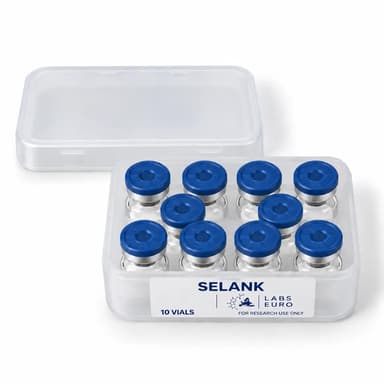
Semax is available with 5 mg, 10 mg and 30 mg of peptide per vial. The figure describes the amount of peptide in the vial, not its concentration; the choice depends on the scope of the planned experiment.
Anyone who wants to explore the mechanisms described here will find a clearly defined starting substance for laboratory work. Buy Semax now and choose the right option in the shop.