NAD+ (Nicotinamide Adenine Dinucleotide) 1000 mg lyophilized is the central redox coenzyme of cellular energy metabolism and the primary substrate for sirtuins, PARP1, and CD38. The molecule is supplied as high-purity lyophilized powder (≥99% HPLC) in 1000 mg vials and addresses research programs in longevity, mitochondrial function, DNA repair, and cellular senescence. Strictly for research and laboratory use (RUO).
What is NAD+?
NAD+ is the oxidized form of nicotinamide adenine dinucleotide, a dinucleotide coenzyme with the molecular formula C21H27N7O14P2 and a molecular weight of 663.43 g/mol. Structurally, it consists of an adenine nucleotide and a nicotinamide nucleotide linked through a pyrophosphate bridge. The molecule cycles between its oxidized form (NAD+) and reduced form (NADH), shuttling reducing equivalents between catabolic and anabolic metabolic pathways. Unlike NAD precursors such as nicotinamide riboside or NMN, NAD+ is supplied in its immediately active form and requires no cellular salvage conversion.
Mechanism of action and signaling pathways
The biological role of NAD+ spans three distinct levels. In redox metabolism, it acts as an electron acceptor in glycolysis, fatty acid oxidation, and the Krebs cycle, delivering reducing equivalents to Complex I of the mitochondrial electron transport chain. As a substrate for class III histone deacetylases, NAD+ activates sirtuins (SIRT1 through SIRT7), which regulate transcription factors such as PGC-1α and FOXO3 through deacetylation, thereby controlling mitochondrial biogenesis and stress resistance. Additionally, NAD+ is consumed by PARP1 for poly-ADP-ribosylation in DNA damage response and is hydrolyzed by the NADase CD38. The equilibrium between these NAD+-consuming enzymes determines the intracellular pool size.
Research applications
In preclinical and in-vitro models, NAD+ is used to investigate longevity, mitochondrial dysfunction, cellular senescence, and DNA repair capacity. Typical experimental endpoints include intracellular NAD+/NADH ratio, sirtuin activity, PARP1 flux, mitochondrial membrane potential, ATP production, and senescence-associated markers such as p16INK4a or SA-β-galactosidase. In aging contexts, the age-dependent decline of NAD+ in mammalian tissues is well documented and motivates restoration studies using NAD+ or its precursors. Neurodegenerative models leverage NAD+ to study axonal integrity and the Wallerian degeneration signaling cascade.
Reconstitution and laboratory handling
Reconstitution is typically performed with bacteriostatic or sterile water for injection. A 1000 mg vial combined with 10 ml of reconstitution volume yields a concentration of 100 mg/ml. Working dilutions depend on the study protocol; typical research doses range from 100 to 500 mg per application. Vigorous shaking against the vial wall should be avoided to minimize shear forces on the molecule. Light protection during handling is essential, as NAD+ is photolabile. After reconstitution, early aliquoting into light-protected tubes is recommended to minimize freeze-thaw cycles.
Quality and documentation
Each batch is tested by HPLC to a minimum purity of 99 percent and verified by mass spectrometry for identity and correct molecular mass (663.43 g/mol). A Certificate of Analysis documents the results of batch release and is provided on request. Production follows established GMP-oriented quality standards, and release per batch is traceably documented. The product is labeled as Research Use Only and is not intended for human consumption.
Storage and stability
The lyophilized powder is stable for at least 24 months at minus 20 degrees Celsius and should be stored dry, light-protected, and moisture-protected until reconstitution. The reconstituted solution remains viable at 2 to 8 degrees Celsius for 14 to 28 days, depending on concentration and aseptic working conditions. For extended storage, early aliquoting into light-protected single-use portions is recommended to minimize freeze-thaw cycles. Prior to use, the material should equilibrate to room temperature and be visually inspected for clarity.
Compatible research peptides
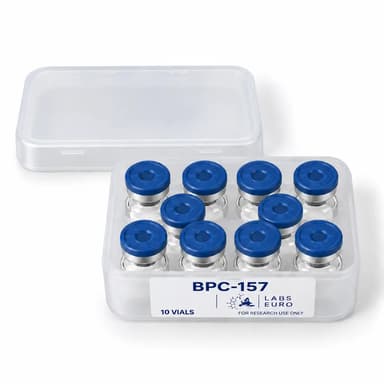
NAD+ is frequently studied in longevity models alongside regenerative peptides such as BPC-157 and TB-500 in separate experimental arms, to distinguish mitochondrial from tissue-specific regeneration pathways. Parallel setups with GHRH analogs like Tesamorelin enable separation of NAD+-mediated sirtuin activation from IGF-1-dependent signaling. Pathway-by-pathway comparison offers methodological advantages over combination tests and enables cleaner attribution of observed effects. In aging and telomere research, NAD+ is additionally used to characterize age-dependent substrate depletion.
Safety notice and Research Use Only
NAD+ 1000 mg is intended exclusively for in-vitro experiments and preclinical research programs. Application in humans or animals outside a documented research context is neither approved nor covered by product release. Recipients are responsible for compliance with local research regulations, import requirements, and internal biosafety policies. The label carries the RUO designation in accordance with international conventions for research materials.