Specification
| Molecule | BPC-157 (Body Protection Compound 157) |
| Sequence | Gly-Glu-Pro-Pro-Pro-Gly-Lys-Pro-Ala-Asp-Asp-Ala-Gly-Leu-Val |
| CAS | 137525-51-0 |
| Molecular weight | 1.419 kDa |
| Form | Lyophilized powder |
| Strength per vial | 5 mg, 10 mg |
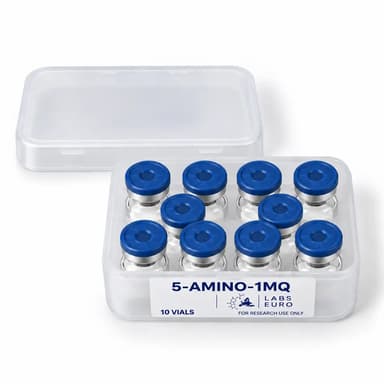
| Box contents | 10 vials of identical strength |
| Purity | ≥99 % (HPLC) |
Mechanism of action
BPC-157 is a synthetic pentadecapeptide of fifteen amino acids. In the scientific literature it is discussed in cell culture and tissue models of repair processes, cell migration and angiogenesis. Further work examines gastric model systems and interactions with signalling pathways of the extracellular matrix. As a defined reference peptide, BPC-157 supports the setup of comparable experimental series in which migration, adhesion and proliferation parameters of cells are recorded. Researchers who buy BPC-157 use this 10-vial kit as a defined reference for in-vitro work.
Reconstitution and handling
The lyophilizate is reconstituted in the laboratory immediately before use with a suitable sterile solvent. The resulting solution is processed promptly and protected from direct light during handling. Volume and concentration details follow the experimental plan of the performing institution; this data sheet makes no specifications on that point. A clean working environment, calibrated pipettes and consumption within a single experimental series support the reproducibility of results.
In-vitro research
BPC-157 is used in in vitro research as a reference for tissue repair models. Typical applications include cell culture and migration assays, investigations of angiogenesis and gastric cell models in which adhesion, proliferation and matrix interactions are recorded. Its defined purity and per-batch testing make the pentadecapeptide a reproducible reference point for comparison series and positive controls in controlled experimental setups.
Quality and analytics
Every batch is tested for purity by HPLC and reaches at least ≥99 %. A complementary identity test confirms the sequence of the fifteen amino acids. Testing is performed per batch and applies uniformly to all vials in a box; the results are recorded for each batch. Deviations from the specified values would be documented and reviewed before a batch is released.
Available amounts per vial: 5 mg, 10 mg. Box of 10 vials.