Specification
| Molecule | GHK-Cu (Copper Tripeptide-1) |
| Sequence | Gly-His-Lys, Cu(II) complex |
| CAS | 49557-75-7 |
| Molecular weight | 340.39 Da (free peptide), 403.92 Da (copper complex) |
| Form | Lyophilized powder |
| Strength per vial | 50 mg or 100 mg |
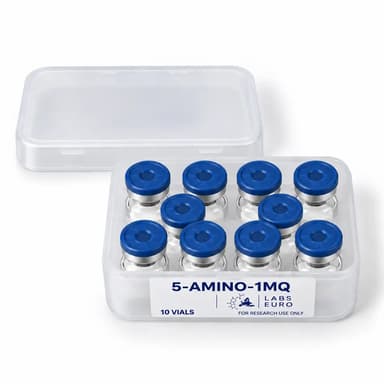
| Box contents | 10 vials of identical strength |
| Purity | ≥99 % (HPLC) |
Mechanism of action
GHK-Cu is a copper tripeptide complex made of the sequence Gly-His-Lys and bound copper. The literature associates the complex with collagen formation, the extracellular matrix, and dermal cell culture models. Research examines fibroblast activity, matrix remodeling, and wound healing models in vitro. The interplay between the peptide backbone and the copper binding site is regarded as a defining feature of the complex, and in vitro systems allow the study of cellular processes involved in matrix formation and maintenance. Researchers who buy GHK-Cu use this 10-vial kit as a defined reference for in-vitro work.
Reconstitution and handling
Reconstitution takes place in the laboratory with a suitable sterile solvent. Once prepared, the solution is processed promptly and protected from direct light. The lyophilized powder stays in its original packaging until reconstitution. Vials are inspected before opening and material is withdrawn with clean laboratory equipment. Handling follows the laboratory standards of the receiving facility, and volume or concentration figures are not part of this data sheet.
In-vitro research
In in-vitro research, GHK-Cu serves as a reference substance in dermal cell culture and extracellular matrix models. The literature associates the complex with collagen synthesis, fibroblast activity and matrix remodeling in dermal models. The models range from simple monolayer cultures to more complex skin equivalents. Concentrations and readout methods follow the respective study protocol, and assessing whether the reagent suits a given experimental model remains with the receiving facility.
Quality and analytics
Every batch of GHK-Cu is tested for purity by HPLC and reaches a purity of ≥99 %. In addition, the identity of the peptide backbone and of the copper binding site is confirmed. Testing is batch specific and covers both the free peptide and the complete copper complex. Both strengths, 50 mg and 100 mg per vial, undergo the same testing scheme, and the analytical work refers to the lyophilized powder before reconstitution.