Specification
| Molecule | KPV (Lysine-Proline-Valine) |
| Sequence | Lys-Pro-Val |
| Molecular weight | 342.48 Da |
| Form | Lyophilized powder |
| Strength per vial | 5 mg, 10 mg |
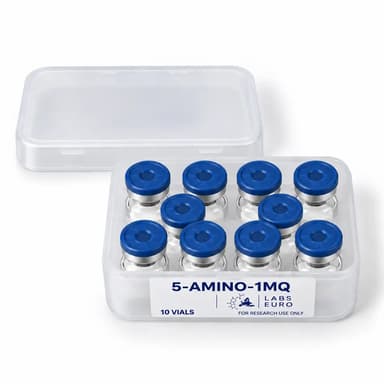
| Box contents | 10 vials of identical strength |
| Purity | ≥99 % (HPLC) |
Mechanism of action
KPV is a short tripeptide composed of lysine, proline and valine. In the literature it is described in inflammation-biology cell culture models. Research focuses on pathways of inflammatory modulation and on how cells respond to the tripeptide in vitro. Typical questions concern how cultured cells react to defined stimuli and which signaling mediators are formed or suppressed in the process. As a reference peptide, KPV supports the comparison of different experimental setups within a laboratory and helps characterize cellular signaling in controlled in-vitro models. Researchers who buy KPV use this 10-vial kit as a defined reference for in-vitro work.
Reconstitution and handling
For reconstitution, the lyophilized powder is combined with a suitable sterile solvent in the laboratory. The solvent is added gently along the vessel wall, and the preparation is mixed until the powder has fully dissolved. The resulting solution is processed promptly, since peptides in dissolved form are more sensitive to environmental influences. Until use, the reagent is protected from direct light. Volume or concentration figures are not part of this description; those parameters are set by the performing laboratory in its own protocol.
In-vitro research
In in-vitro research, KPV is used as a reference for inflammation-biology cell culture models. Typical applications include signaling pathway assays that follow the activity of inflammation-related mediators, as well as cell culture experiments on how cells respond to defined stimuli. Because of its short sequence, the tripeptide is well suited to dilution series, allowing concentration-response relationships to be studied at the cellular level. KPV also serves as a well-characterized reference substance for comparisons between cell lines or treatment approaches.
Quality and analytics
Every batch of KPV is tested for purity by HPLC, and the content is ≥99 %. An identity check additionally confirms the Lys-Pro-Val sequence. Results are documented per batch. This analytical characterization provides a reliable basis for the reproducibility of measurement series and for comparing in-vitro results across different experimental runs.
Available amounts per vial: 5 mg, 10 mg. Box of 10 vials.