Specification
| Name | VIP (vasoactive intestinal peptide) |
| Sequence | Natural 28-amino-acid peptide |
| Molecular weight | ≈3.33 kDa |
| Form | Lyophilized powder |
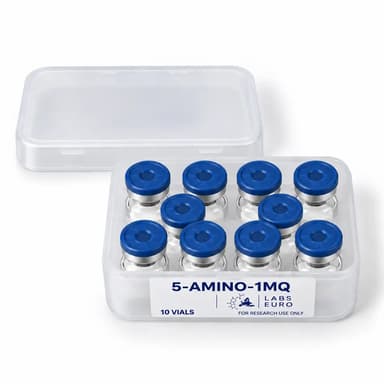
| Strength per vial | 10 mg |
| Box contents | 10 vials of identical strength |
| Purity | ≥99 % (HPLC) |
VPAC receptors and the cAMP pathway
VIP is an endogenous neuropeptide of 28 amino acids, characterized in research through the receptors VPAC1 and VPAC2. Both subtypes belong to the secretin family of G protein-coupled receptors and couple through Gs. Agonist binding raises cytoplasmic cAMP and activates protein kinase A. VIP and PACAP share part of this receptor profile, so binding and functional assays often run both ligands in parallel. In intestinal, neural, and immune cell models, lines express VIP receptors at different densities. The synthetic peptide mirrors those cascades in controlled in vitro systems and serves as a reference agonist for adenylate cyclase activity and downstream gene expression. Teams that buy VIP take the vasoactive intestinal peptide at 10 mg per vial.
Reconstitution and handling
Lyophilized VIP powder is reconstituted in the laboratory with a suitable sterile solvent. The solvent is added slowly along the vessel wall, then the preparation is mixed gently until the peptide has dissolved fully. Once in solution, VIP is more sensitive to ambient conditions, so further work proceeds promptly. Until use, the reagent is kept away from direct light. Concentration and volume are set by the laboratory in its own protocol. This description does not fix dilution volumes.
In vitro applications
In vitro research uses VIP as the reference ligand in competitive binding assays at VPAC1 and VPAC2 and in cAMP accumulation assays that quantify agonist potency against other secretin-family ligands. Neuronal and glial cultures use VIP to follow synchronized cell responses, neuroprotection signals, and the release of inflammatory mediators after peptide stimulation. Immune and epithelial cell models use VIP to track MAPK and cAMP-dependent readouts. Ready solubility after reconstitution supports defined dilution series for concentration-response curves in second-messenger and reporter-gene assays.
Quality and analytics
Each batch is tested by HPLC for peptide content and purity, and purity stands at ≥99 %. An identity check confirms the 28-amino-acid backbone of the molecule. Results are recorded per batch and apply to the 10 mg strength supplied. This analytical profile supports reproducible binding data and parallel cAMP measurement series in the laboratory.