EL-27· Tutkimuspeptidi
Semaglutid
Painonhallinta
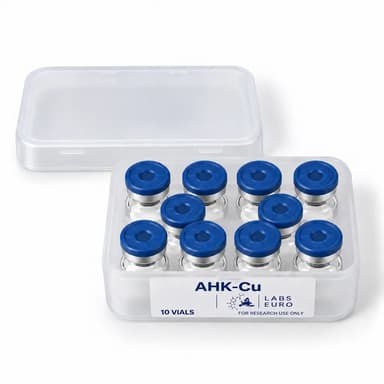
Kuvituskuva; ulkoasu ja pakkaus voivat poiketa. 10 merkitsemätöntä injektiopulloa, merkinnät vain pakkauksessa. Ratkaiseva on valittu vahvuus.
EL-27· Tutkimuspeptidi
Kuvituskuva; ulkoasu ja pakkaus voivat poiketa. 10 merkitsemätöntä injektiopulloa, merkinnät vain pakkauksessa. Ratkaiseva on valittu vahvuus.





Ei vielä arvosteluja. Olkaa ensimmäinen ja jakakaa kokemuksenne.
Vain Research Use Only (RUO)
EL-27 · Viitetiedot
GLP-1:n analogi · lipidiasyylimodifioitu
Synonyymit: Ozempic · Wegovy · Rybelsus
Semaglutide is a GLP-1 receptor agonist. The substance binds to the receptor for glucagon-like peptide 1, an endogenous gut hormone released after food intake that mediates satiety. This brings into focus a hormonal signal that connects the gut, brain and metabolism.
GLP-1 receptors are found, among other places, in brain regions that regulate hunger and eating behaviour. When the receptor is activated, the satiety signal is strengthened while hunger and food intake decrease. For the approved semaglutide medicine Wegovy, the European Medicines Agency describes exactly this effect: greater satiety, less hunger and reduced food intake (EMA assessment of Wegovy).
What is biologically striking is the breadth of the signal: it does not act on a single cell but on a circuit that influences energy intake and body weight over the long term. This is precisely what makes semaglutide so interesting for weight and metabolic research. Satiety is not a passive state but an active hormonal feedback signal.
The STEP 1 trial examined semaglutide in adults with overweight or obesity without diabetes. All participants also received a lifestyle intervention. After 68 weeks, mean weight change was -14.9% with semaglutide and -2.4% with placebo (STEP 1 trial).
This is a study mean under defined conditions, not a guaranteed result for an individual. Gastrointestinal adverse events and related study discontinuations were more common with semaglutide than with placebo.
SELECT examined a different question in a different population: adults with established cardiovascular disease and overweight or obesity, but without diabetes. The primary composite endpoint comprised cardiovascular death, non-fatal myocardial infarction and non-fatal stroke. A first event of this type occurred in 6.5% of participants with semaglutide and 8.0% with placebo; the hazard ratio was 0.80 (SELECT trial). The absolute difference between the rounded event rates is 1.5 percentage points.
A hazard ratio of 0.80 means a 20% relative reduction in hazard compared with placebo. It does not mean that the proportion of people experiencing an event fell by 20 percentage points. The absolute rates of 8.0% and 6.5% make the difference visible: 1.5 percentage points separate the rounded rates. In addition, this was secondary prevention in a population with established cardiovascular disease, not primary prevention in healthy people.
Regulatory assessment and the large outcome trials relate to specific semaglutide formulations, including the approved medicine Wegovy. Approval and bioequivalence cannot readily be transferred to other semaglutide products. For interpreting the evidence, it therefore remains important which formulation and which population were studied.
Semaglutide combines a clearly defined receptor mechanism with substantial clinical evidence on appetite regulation, weight management and cardiovascular endpoints. The shop offers semaglutide in variants with strengths of 10 mg, 20 mg and 30 mg per vial. Buy semaglutide now and select the variant that suits your research project.
Tälle tuotteelle ei ole tällä hetkellä julkaistu analyyttisiä erätietoja.
Semaglutid ist ein GLP-1-Rezeptoragonist und bildet ein körpereigenes Sättigungssignal nach. Der Rezeptor verbindet Darmhormon, Gehirn und Appetitregulation. Dadurch lässt sich untersuchen, wie ein einzelnes hormonelles Signal Hunger, Sättigung und Nahrungsaufnahme beeinflusst.
STEP 1 untersuchte Gewichtsmanagement bei Erwachsenen mit Übergewicht oder Adipositas ohne Diabetes über 68 Wochen. SELECT fragte nach kardiovaskulären Ereignissen bei Erwachsenen mit bestehender kardiovaskulärer Erkrankung und Übergewicht oder Adipositas ohne Diabetes. Die Studien beantworten also unterschiedliche Fragen in unterschiedlichen Populationen.
Sie beschreibt eine relative Reduktion des Hazard für den zusammengesetzten kardiovaskulären Endpunkt um 20 Prozent. Die absoluten Ereignisraten lagen bei 8,0 Prozent unter Placebo und 6,5 Prozent unter Semaglutid, also 1,5 Prozentpunkte auseinander. Relative Hazard-Reduktion und absolute Risikodifferenz sind nicht dasselbe.
Die Zulassung von Wegovy und die großen Studien betreffen bestimmte Formulierungen und Populationen. Bioäquivalenz und klinische Wirkung anderer Präparate sind damit nicht automatisch belegt. Entscheidend ist, welche Formulierung in welchem Modell oder bei welcher Gruppe untersucht wurde.
Retatrutide
Tirzepatid
5-Amino-1MQ
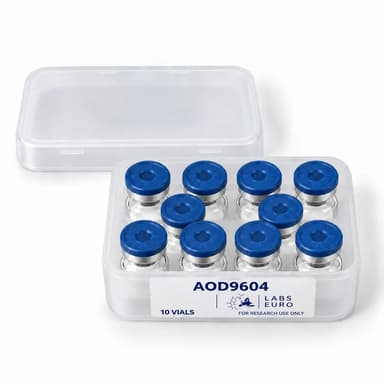
AOD-9604
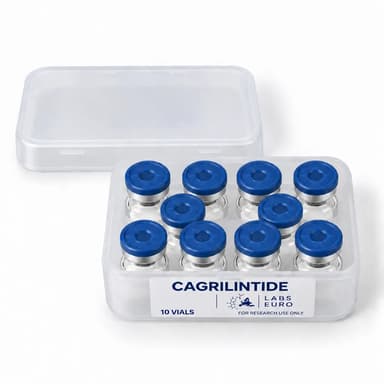
Cagrilintid 5 mg
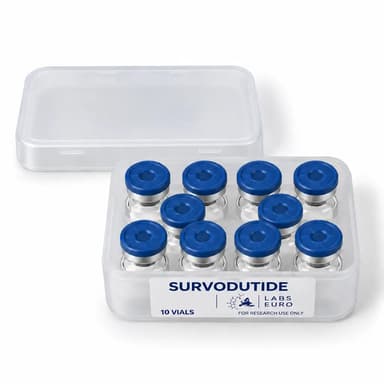
Survodutid 10 mg
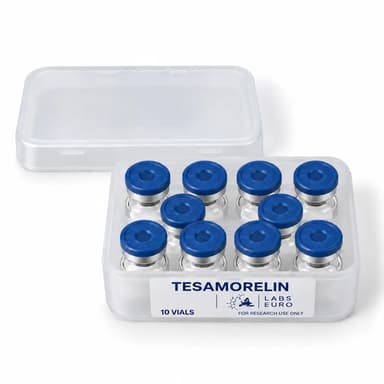
Tesamorelin
AHK-Cu